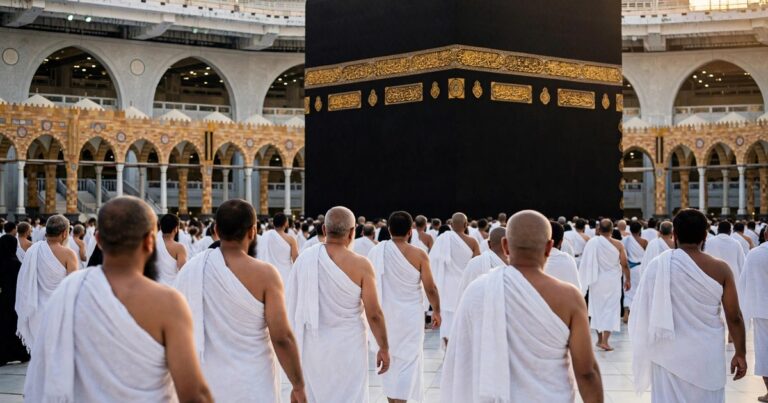
Umrah in Ramadan carries a reward that the Prophet compared to Hajj, in a hadith recorded in Sahih al-Bukhari, and that is why it is the busiest month of the Umrah year. It does not replace the obligation of Hajj. Ramadan 1448 is expected to begin around 8 February 2027, subject to moon sighting. You need a free Umrah permit on the Nusuk app, hotels near the Haram sell out months ahead, and a traveller may break the fast on the day of arrival to perform the rites with strength.
What is the reward for Umrah in Ramadan?
The reward is stated by the Prophet himself: Umrah in Ramadan is equal to Hajj. Ibn Abbas narrates that the Prophet asked a woman of the Ansar why she had not performed Hajj with him; the family’s spare camel had gone with her husband and son, and he told her to perform Umrah when Ramadan came, “for Umrah in Ramadan is equal to Hajj (in reward)” (Sahih al-Bukhari 1782). Muslim records the same account with her name, Umm Sinan, and the wording that Umrah in Ramadan would suffice for Hajj, or a Hajj in his company (Sahih Muslim 1256). That is the whole of the umrah in ramadan hadith: a woman who wanted Hajj and could not go, offered Umrah in Ramadan as the way to reach it.
Does Umrah in Ramadan replace the obligation of Hajj?
No. A person who performs Umrah in Ramadan still owes Hajj once in their life if able. The Islam Question and Answer ruling on this hadith states it directly: “Undoubtedly, Umrah in Ramadan does not take the place of the obligatory Hajj,” and explains that the equivalence is “in terms of amount, not in terms of type” (islamqa 104926). Hajj has acts that Umrah does not, the standing at Arafah, the stoning, the sacrifice, and their virtues are not transferred. A Ramadan Umrah is rewarded to the measure of a Hajj; it is not a substitute for the fifth pillar, and no reputable operator should sell it as one. A separate ruling on the same site adds that the recommendation covers the whole month, not only the last ten days (islamqa 38221).
When is Ramadan 1448 expected to begin?
Ramadan 1448 AH is expected to begin on or around Monday 8 February 2027, and the date depends on the sighting of the new moon, so it may shift by a day (IslamicFinder). Eid al-Fitr, 1 Shawwal 1448, is expected on 9 March 2027, and the Ministry of Hajj and Umrah has set that day as the last on which Umrah visas will be issued for the 1448 season (Ministry of Hajj and Umrah, 17 May 2026).
| Date (expected, subject to moon sighting) | Hijri | What it means for a Ramadan Umrah |
|---|---|---|
| 31 May 2026 | 14 Dhul Hijjah 1447 | Umrah visa issuance for the 1448 season opened; permits on Nusuk from 1 June (Ministry calendar) |
| Around 8 February 2027 | 1 Ramadan 1448 | First fast; first-ten-days arrivals are the quietest of the month |
| Around 18 February 2027 | 11 Ramadan | Middle ten days; crowds build week by week |
| Around 27 February 2027 | 20 Ramadan | Last ten nights begin at sunset; the Haram is at capacity from here |
| 9 March 2027 | 1 Shawwal | Eid al-Fitr; final date for Umrah visa issuance (Ministry calendar) |
| 23 March 2027 | 15 Shawwal | Final date for Umrah pilgrims to enter the Kingdom |
| 7 April 2027 | 30 Shawwal | Final date for Umrah pilgrims to depart |
The deadlines are fixed to the Hijri calendar, so if the moon sighting shifts the month the Gregorian dates move with it. The visa window closes on Eid, not before it, so a trip covering the last ten nights and Eid is inside the season. Weather and crowds, month by month, are in the guide to the best time to perform Umrah.
Can you do Umrah while fasting?
Yes, and you may also choose not to fast on the day you travel and arrive, because the Quran gives the traveller a concession: “whoever of you is ill or on a journey, then let them fast an equal number of days after Ramadan” (Quran 2:184). Most pilgrims fast every day of a Ramadan Umrah and perform the rites at night after iftar. The question that matters is the landing day. Islam Question and Answer was asked whether a traveller may break the fast to have the strength for Umrah, and answered that it is better to break the fast and perform Umrah on arrival than to keep it and delay the rites until night (islamqa 106458). The answer rests on the Prophet’s own example of arriving in Makkah in Ramadan not fasting, and the days are made up afterwards, as the verse says.
A workable rule: you are a traveller from the moment you leave home. If you land in the afternoon and want to perform Umrah straight away, break the fast, eat, and go to the Haram rested. If you land in the evening, keep the fast, take iftar at the hotel, and perform Tawaf after Tarawih. Once settled in Makkah, follow your own school’s ruling on whether the concession continues, and fast if you can.
How do permits work for Umrah and the Rawdah in Ramadan?
You need a permit for Umrah and a separate permit to pray in the Rawdah, both free through the Nusuk app, and in Ramadan the slots go quickly. The Ministry of Hajj and Umrah’s service page describes the Umrah permit as immediate, free, and issued on the Nusuk app and website by choosing a date and an available time slot (Ministry of Hajj and Umrah, Umrah Permit Application). Its FAQ adds two rules that shape a Ramadan trip: only one Umrah permit can be active at a time, and a new one can be booked once the first expires; and visits to the Rawdah must be at least 30 days apart (Ministry of Hajj and Umrah FAQ).
So a pilgrim hoping for several Umrahs from Tan’im in the last ten nights is limited by slot availability, not by fiqh: the FAQ says there is no limit on how many times Umrah may be performed, but each needs its own permit. And the 30-day rule means one Rawdah visit per trip, so book it as soon as your dates are confirmed. Our team books both permits for package customers; the app may show additional conditions for the peak period, so check it in the week before you fly.
Why are the last ten nights different?
The last ten nights hold Laylat al-Qadr, which the Prophet said to seek in the odd nights of the last ten of Ramadan (Sahih al-Bukhari 2017), so pilgrims from across the world arrange to be in Makkah for exactly those nights. Numbers rise from the twentieth, and the twenty-seventh night is the most crowded in the Haram.
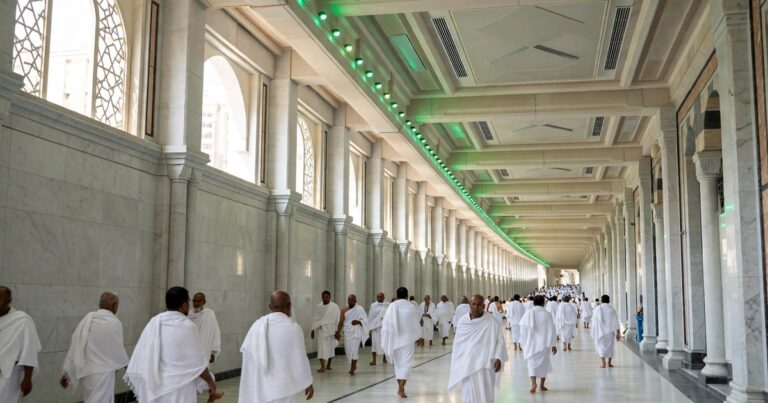
The effects are predictable. Tawaf is directed to the upper floors and the roof for much of the night, where a circuit is several times longer than one beside the Kaaba, so rites that take two hours in a quiet month can take four or more; the guide to how long Umrah takes gives timings. Roads around the Haram close to private cars, so a hotel within walking distance becomes the difference between praying Tarawih inside the mosque and praying it in the street. None of this is a reason to avoid the last ten nights; it is the reason they are booked first and priced highest.
Why do Ramadan Umrah packages cost more, and what changes in them?
Ramadan Umrah packages cost more because rooms within walking distance of the Haram are limited and demand for them in the last ten nights exceeds supply; the closer the hotel, the steeper the rise, and flights around 20 Ramadan and Eid follow the same pattern. No figure is quoted here because the price depends on the hotel, the nights and the booking date.
What a Ramadan package changes, beyond price, is the shape of the day:
- Suhoor and iftar replace breakfast and dinner, with a packed suhoor for nights spent in the Haram.
- The itinerary moves to the night: Tarawih in the mosque, Tawaf after midnight, rest after Fajr.
- Hotel proximity is weighted more heavily, because road closures make transfers from outer hotels slow or impossible.
- Madinah is usually placed first, so the Rawdah visit is done before the Makkah crowds peak.
- Permits are booked in advance for every rite.
The hotels near Masjid al-Haram guide explains why the first few hundred metres of distance matter most.
When should you book Umrah in Ramadan?
Book a Ramadan Umrah as early as your dates allow, and for the last ten nights of 1448 that means the autumn of 2026, because the closest hotels are allocated first and do not come back. The visa is quick: the UK visa guide sets out the eVisa and ETA routes, and issuance stays open until 9 March 2027. The constraint is never the visa; it is the room. If the last ten nights are full at your budget, the first ten days give the same reward in the hadith, a quieter mataf and lower prices, and are what we suggest to families with young children.
Ready to go?
Our Ramadan Umrah packages for 1448 are built around the calendar above: hotels within walking distance for the last ten nights, suhoor and iftar arranged, Madinah first, and permits booked before you fly. Prices show in your own currency, so a reader in Pakistan sees rupees.
Frequently Asked Questions
How much does Umrah in Ramadan cost?
A Ramadan Umrah costs more than the same trip in a quieter month because hotels near the Haram and flights around the last ten nights are in short supply. The figure depends on the hotel’s distance from the mosque, the number of nights, the departure city and how early you book, and current package prices are shown in your own currency.
Can you do Umrah in Ramadan?
Yes. Umrah is permitted in every month, and the Prophet specifically encouraged it in Ramadan in the hadith recorded in Sahih al-Bukhari 1782. The Ministry of Hajj and Umrah’s 1448 season runs until 9 March 2027 for visa issuance and 23 March 2027 for entry, so the whole of Ramadan 1448 falls inside it.
Is the first half of Ramadan or the last ten nights better for Umrah?
The hadith attaches the reward of Hajj to Umrah in Ramadan as a whole, and the Islam Question and Answer ruling 38221 states that this covers all of Ramadan, not just the last ten days. The last ten nights add the search for Laylat al-Qadr and the largest crowds; the first ten days give the same Umrah reward with shorter Tawaf times, easier permits and lower prices.
How long does Tawaf take in Ramadan?
Tawaf in the last ten nights of Ramadan can take well over an hour, and the full set of rites from entering the mosque to the barber can take four hours or more, against two to four in a quiet month. Timings are shortest between Fajr and mid-morning and longest after Tarawih, when the mataf fills.
What is the last date to enter Saudi Arabia for Umrah in 1448?
The Ministry of Hajj and Umrah has set 15 Shawwal 1448, expected to be 23 March 2027, as the final date for Umrah pilgrims to enter the Kingdom, with visa issuance ending on 1 Shawwal (9 March 2027) and departure required by 30 Shawwal (7 April 2027). The Hijri dates are fixed; the Gregorian dates move if the moon sighting shifts the month.