There is one injection that every Umrah pilgrim needs, regardless of which country they travel from, and it has a timing rule that catches people out every season. Leave it too late and the certificate is not valid when you land.
Everything below comes from the Saudi health authorities’ own document, Health Requirements and Recommendations for Travelers to Saudi Arabia for Umrah, 1447H (2026), published by the Ministry of Health. Where something is required rather than recommended, I have said so, because the two get mixed up constantly.
Which vaccine is required for Umrah?
Meningococcal meningitis, the ACWY vaccine. The requirement applies to all individuals intending to perform Umrah from all countries. There is no exemption by nationality for this one.
You can satisfy it with either of two vaccine types, and the validity differs:
| Vaccine type | Must have been given within | Minimum time before arrival |
|---|---|---|
| Quadrivalent ACYW conjugate, or pentavalent ACYWX conjugate | last 5 years | 10 days |
| Quadrivalent ACYW polysaccharide | last 3 years | 10 days |
Two details in that table do the damage.
The 10 day rule. The dose must be at least 10 days before you arrive in Saudi Arabia. Booking a jab the week you fly does not work. Count backwards from your arrival date, not your booking date.
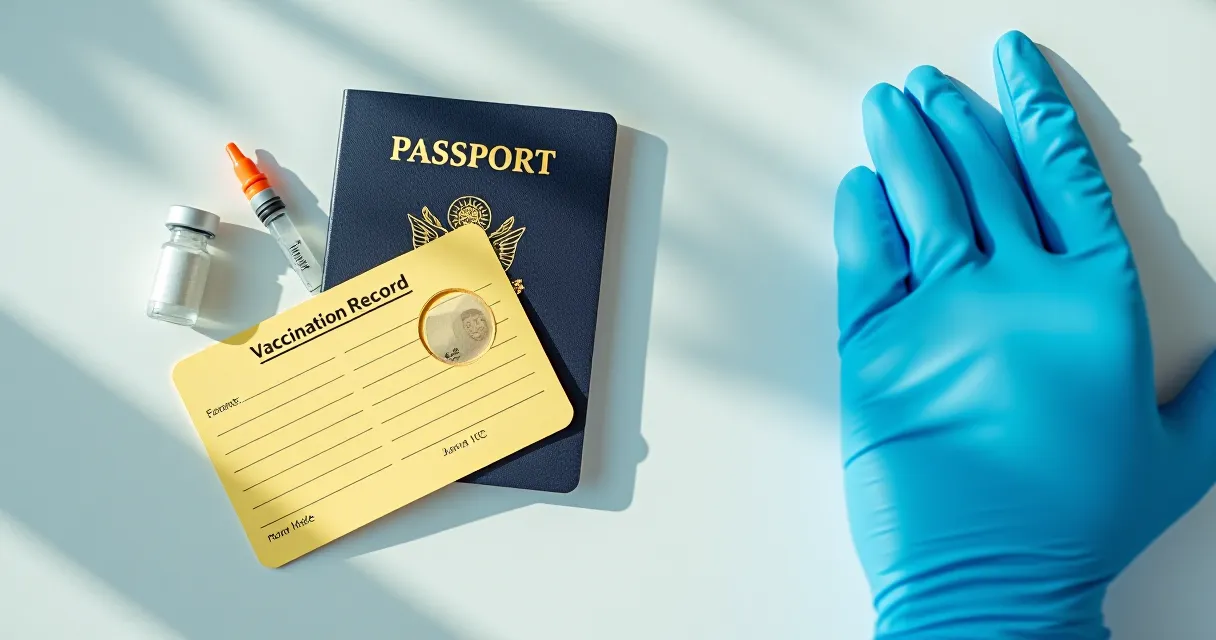
The certificate must name the vaccine. The Saudi document is explicit: if the type of vaccine is not indicated on the certificate, it is treated as valid for 3 years only, even if you had the 5 year conjugate version. Check that the pharmacy has written the vaccine name and the date of administration on the card before you leave the counter.
Note also that the conjugate vaccines are described as safe and effective for people over 55, which comes up when older parents are travelling.
Who has to show a certificate at the border?
Everyone needs the vaccine. Pilgrims arriving from 26 specified countries are additionally required to produce a certificate proving it:
Benin, Burkina Faso, Burundi, Cameroon, Central African Republic, Chad, Côte d’Ivoire, Democratic Republic of the Congo, Eritrea, Ethiopia, Gambia, Ghana, Guinea, Guinea-Bissau, Kenya, Mali, Mauritania, Niger, Nigeria, Rwanda, Senegal, South Sudan, Sudan, Tanzania, Togo, Uganda.
That said, carry the certificate regardless of where you fly from. It costs nothing to have it in the document wallet and you cannot produce it retrospectively.

Do you need a polio vaccine for Umrah?
Only if you are arriving from certain countries, and the list matters because it includes two that send very large numbers of pilgrims.
Required, at least one dose of bivalent oral polio vaccine (bOPV) or inactivated polio vaccine (IPV), regardless of age or prior vaccination status, for arrivals from:
- Afghanistan and Pakistan (wild poliovirus type 1)
- Mozambique and DR Congo (cVDPV1)
- Guinea (cVDPV3)
Also required, at least one dose of IPV, for arrivals from a longer list that includes Indonesia, Palestine, Yemen and twenty African countries.
If you are flying from Pakistan, treat the polio dose as compulsory alongside the meningitis one. The document recommends the IPV dose be given within the previous 12 months and not less than 4 weeks before arrival.
A separate, lower tier of the document advises rather than requires polio vaccination for arrivals from another list which includes Spain, so check the current document against your own departure country rather than assuming Europe is exempt.
Is the COVID vaccine still required?
Not for most people. It is required only for specific groups travelling for Umrah:
- Age over 65
- Pregnant women
- Chronic heart, respiratory or kidney conditions
- Hereditary blood disorders such as sickle cell anaemia and thalassaemia
- Congenital or drug induced immunodeficiency
- Cancer
- Chronic neurological conditions
Those travellers need one of: a single dose of the updated 2025-2026 vaccine, a completed primary series from 2021 to 2024, or laboratory confirmed recovery from infection during 2025.
For everyone else it is a recommendation, not a requirement.
What about yellow fever?
Required for arrivals from a listed set of African and South American countries, for anyone older than 9 months. The certificate is valid for life, starting 10 days after vaccination.
If you are flying from the UK, Pakistan, Indonesia or Morocco, this does not apply to you unless you have recently transited one of the listed countries.
What is recommended but not required
Worth having, not checked at the border.
Seasonal influenza, the updated vaccine for the current season. Sensible in a crowd of that density.
Routine immunisations up to date: diphtheria, tetanus, pertussis, polio, measles, chickenpox and mumps. A travel health appointment is a good moment to check these anyway.
If you have a chronic condition, the Saudi guidance asks you to carry documentation of it and enough medication in its original packaging. Not a loose strip in a washbag. Original boxes, with the pharmacy label.
The heat guidance nobody reads
The same document has a section on heat related illness, and it is there for a reason. Pilgrims, particularly older ones, are advised to avoid direct sun during the rituals and to drink enough fluids.
The part worth flagging to a doctor before you travel: medications that worsen dehydration, such as diuretics, or that interfere with the body’s heat exchange, may need adjusting by the treating physician before the trip. If a parent is on blood pressure medication and travelling in summer, that is a conversation to have in advance rather than in Makkah.
For what the temperatures actually look like month by month, our guide to the best time to perform Umrah sets out the heat and crowd pattern across the year.
A simple sequence
1. Eight weeks out, book a travel health appointment. This is also when polio timing works if you need it. 2. At the appointment, ask specifically for MenACWY conjugate, not the older polysaccharide, because the conjugate gives you five years rather than three. 3. Before leaving the counter, check the certificate names the vaccine and the date. 4. Minimum 10 days before arrival. Not 10 days before booking. 5. Photograph the certificate and keep a copy in your email as well as in the folder.
Vaccination is separate from the visa itself. If you have not sorted that yet, the routes and documents are in our guide to the Umrah visa from the UK, or from Pakistan if that is where you are travelling from.
Frequently asked questions
Which injection is compulsory for Umrah?
The meningococcal ACWY vaccine. It is required of all individuals performing Umrah from all countries, per the Saudi Ministry of Health requirements.
How long before Umrah should I get the meningitis vaccine?
At least 10 days before you arrive in Saudi Arabia. The conjugate vaccine then counts for 5 years, the polysaccharide for 3.
How long is the Umrah meningitis vaccine valid for?
Five years for the quadrivalent ACYW or pentavalent ACYWX conjugate vaccine, three years for the polysaccharide version. If the certificate does not state which vaccine was given, it is treated as valid for three years only.
Do I need a polio vaccine for Umrah from Pakistan?
Yes. Arrivals from Pakistan are required to have at least one dose of bOPV or IPV, regardless of age or previous vaccination, because Pakistan is listed for wild poliovirus type 1.
Is the COVID vaccine required for Umrah?
Not for most pilgrims. It is required only for over 65s, pregnant women and people with listed chronic conditions. For everyone else it is recommended.
Do children need the Umrah vaccine?
The meningococcal requirement applies to all individuals intending to perform Umrah. Discuss the appropriate formulation and age thresholds with your travel clinic, as the vaccine schedule for young children differs.
Where do I get the Umrah injection in the UK?
Travel clinics, many pharmacy chains and some GP surgeries provide MenACWY. It is often a private vaccine for travel purposes, so expect a fee, and ask for the conjugate version by name.