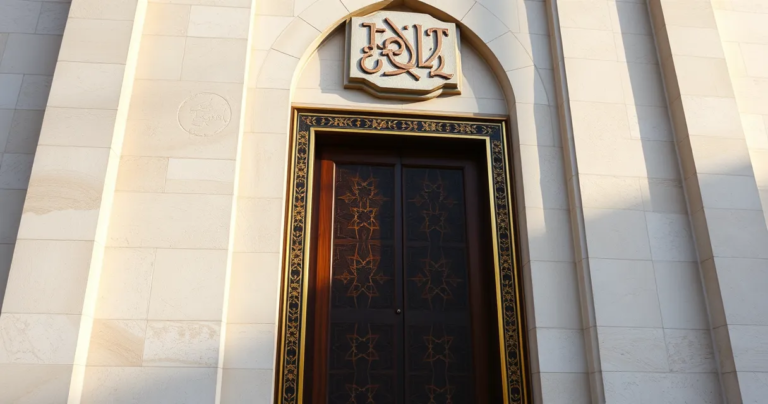
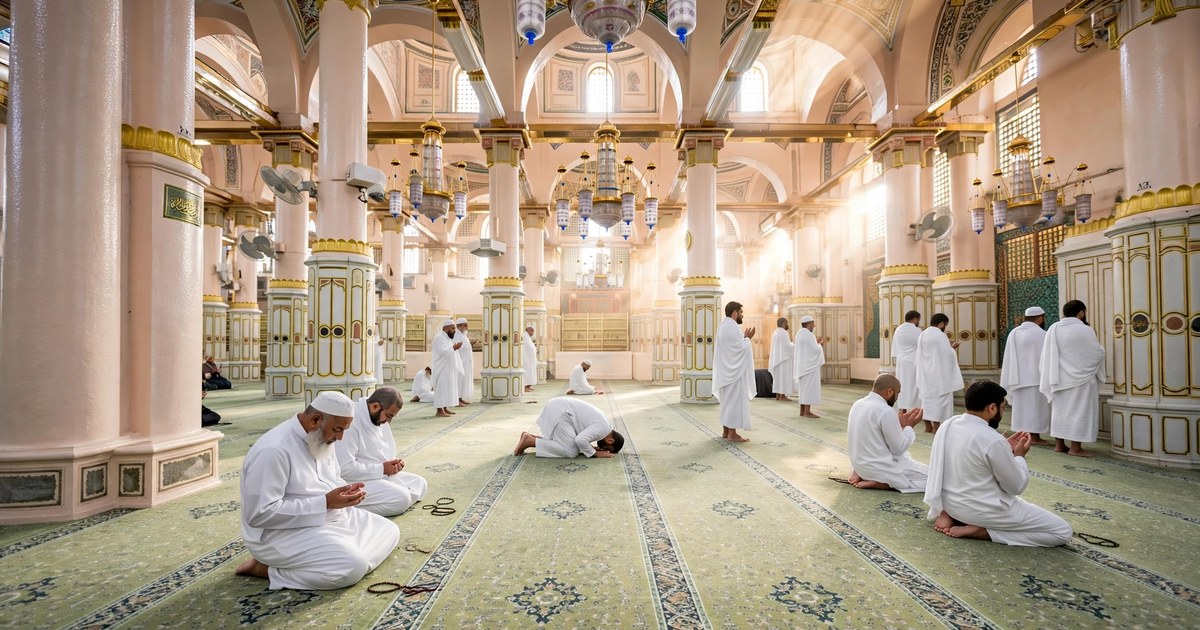
The Rawdah is the area inside the Prophet’s Mosque in Madinah between the Prophet’s house, where he is buried, and his minbar. He described it as a garden of the gardens of Paradise. It measures 22 metres by 15 metres, it is carpeted in green where the rest of the mosque is red, and you can only pray inside it with a timed permit issued through Nusuk, the Saudi government’s pilgrim app. Entry to the rest of the mosque needs no permit at all.
What is the Rawdah in Madinah?
The Rawdah is the strip of the original mosque that lay between the Prophet’s home and the pulpit he preached from. Abu Huraira reports him saying, “Between my house and my pulpit there is a garden of the gardens of Paradise, and my pulpit is on my fountain tank,” recorded in Sahih al-Bukhari 1196. The full name on official signage is Al-Rawdah Al-Sharifah, the Noble Garden; the word rawdah simply means garden.
The Saudi Press Agency, reporting on the mosque’s administration in March 2026, gives the area as 330 square metres, 22 metres long and 15 metres wide. That is a little larger than a tennis court, inside a mosque that holds hundreds of thousands, which is why access is rationed.
Why is the Rawdah so special?
It is special because the Prophet named it as a piece of Paradise, inside a mosque that already carries a multiplied reward. The same narrator records him saying that one prayer in his mosque is better than a thousand prayers in any other mosque except Masjid al-Haram, in Sahih al-Bukhari 1190. The Rawdah is the part of that mosque he stood, prayed and taught in. The hadith does not attach a fixed reward to a fixed number of rak’ahs, so you are not missing a target if your slot only allows two.
Who is buried in Al Rawdah?
The Prophet, Abu Bakr and Umar are buried in what was Aisha’s room, the chamber beside the Rawdah. Aisha narrates that he died in her lap and was buried in her house, in Sahih al-Bukhari 1389. When Umar was stabbed, he sent his son to ask Aisha for permission to be buried beside his two companions, and she gave up the place she had kept for herself, recorded in Sahih al-Bukhari 1392.
Today the chamber is enclosed by a brass screen under the green dome. The grave is not inside the prayer area; men pass the screen as they leave, give their salutations, and are kept moving. Our Madinah ziyarat guide covers the other sites around the mosque.
Can we enter Rawdah without a permit?
No. The Ministry of Hajj and Umrah states that a permit is required to pray in the Rawdah and that it is booked through the Nusuk app, on its official FAQ page, last updated on 16 September 2026. The same page confirms that no booking is needed to pray anywhere else in the Prophet’s Mosque, and that no permit is needed to visit the grave and give salutations, which it notes is for men only.
The Ministry page spells the app “Nusk”; it is the same Nusuk app you use for the Umrah permit in Makkah, and one account serves both.
How do you book a Rawdah slot on Nusuk?
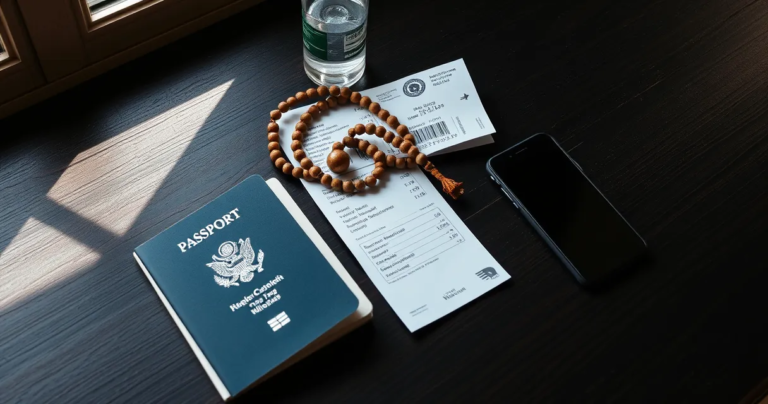
You book it in the Nusuk app, under the permits section, by choosing the Rawdah prayer service, a date and one of the time windows shown for your gender. The rules below are taken from the Ministry FAQ linked above; they are the ones that catch people out.
| Rule | What the Ministry of Hajj FAQ says |
|---|---|
| Who needs a permit | Everyone aged five and over who wants to pray in the Rawdah |
| Where to book | The Nusuk app (or Tawakkalna) |
| Registering as a visitor | Passport number, visa number, date of birth, nationality, mobile number and email; a valid visa is enough to register from outside Saudi Arabia |
| Companions | Up to four companions per account, plus any number of dependants |
| Changing the time | Not possible; cancel before the slot starts and book a new one |
| Missing the slot | Wait for the first permit to expire, then book again |
| Repeat visits | A 30 day gap between one Rawdah visit and the next |
| Health certificates | None required at present, according to the same FAQ |
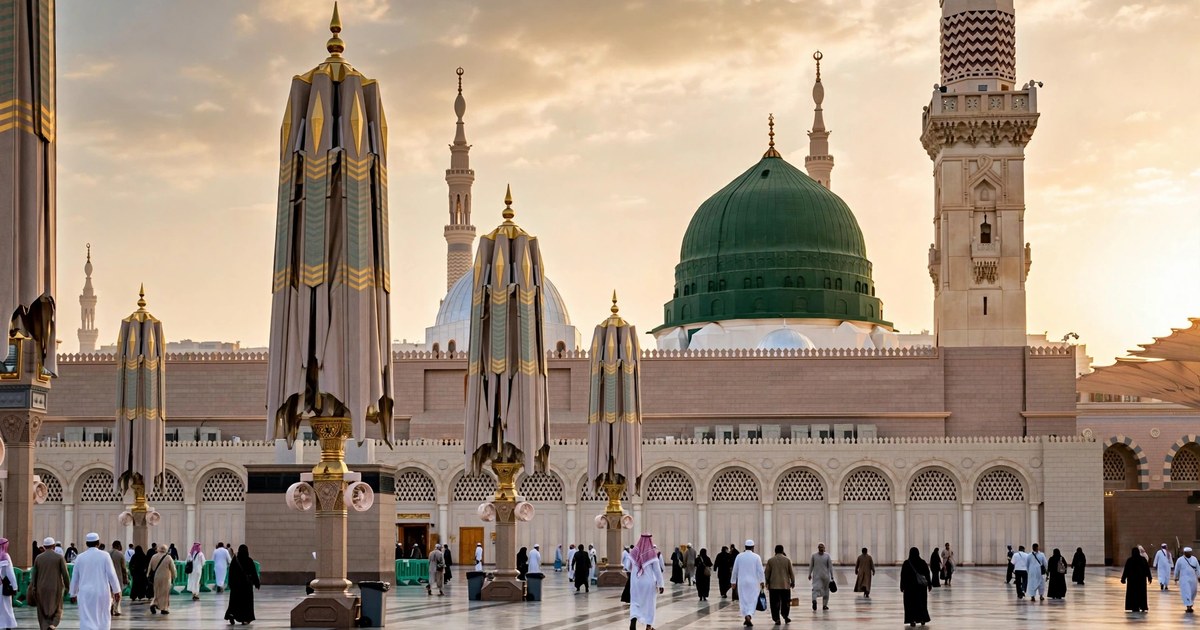
Three notes from running groups through this. Register everyone in Nusuk before you fly; the app accepts a valid visa from abroad, and the hotel lobby on arrival is where most delays start. Book the day your Madinah dates are fixed, because popular windows go first. And the 30 day rule means one Rawdah prayer each on a ten day trip; treat it as the appointment it is. Customers who book with us upload their visa to their account page and we walk them through the app before departure.
Can females go to Rawdah?
Yes. The same Saudi Press Agency report confirms daily scheduled slots for both men and women, and women book them in the same Nusuk app. The women’s windows are separate from the men’s and are shown when you select the Rawdah service, so check them for your dates rather than relying on a previous trip.
Women enter through the women’s section and are brought to the Rawdah in groups. The Ministry FAQ states that giving salutations at the grave is for men only, so the women’s route has no stop in front of the chamber screen; women give their salutations from within the Rawdah instead. The carpet, the columns and the reward in the hadith are the same.
What do you do at Rawdah?
You pray two rak’ahs, make dua, and leave when the stewards ask you to. A slot gives you a time window to arrive, not a guaranteed length of stay. In our groups’ experience you are checked at the gate at the start of your window, held in a carpeted waiting area, released in a batch when the previous batch clears, and then have roughly ten minutes on the green carpet before the stewards begin moving you along. On quiet weekdays outside Ramadan it can be longer; in peak season, less.
Because the time is short, decide in advance what you will do with it:
- Pray two rak’ahs as soon as you find a gap on the carpet; do not wait for a spot by a particular pillar.
- Make the dua you came for. Write it down beforehand so the moment does not empty your head.
- Send blessings on the Prophet. The wording is in our duas for Umrah guide.
- Men: on the way out, stop in front of the grave screen, give salutations to the Prophet, then to Abu Bakr and Umar, and keep walking.
Do not film, and do not argue with a steward; the person behind you has waited as long as you have.
How to identify the Rawdah?
The Rawdah is the only part of the Prophet’s Mosque with green carpet; everywhere else is red. That is the quickest marker. The second is the columns. Inside the green area stand the mosque’s eight historic pillars, originally palm trunks and later rebuilt in stone, with names such as the Perfumed Pillar, the Pillar of Aisha and the Pillar of Repentance, each marking a spot where the Prophet prayed, received delegations or sat in retreat, as the Saudi Press Agency describes. They are older, stouter and more decorated than the plain columns of the later extensions.
The third marker is the minbar at the front edge, the pulpit end of “between my house and my pulpit”; the brass screen of the chamber behind you is the house end. Green carpet, minbar ahead, screen behind: you are in the Rawdah.
Our Umrah packages include Madinah hotels within walking distance of the mosque and help with Nusuk registration before you travel, so the Rawdah permit is booked rather than hoped for. Prices show in your own currency, pounds for readers in the UK and rupees for readers in Pakistan.
Once you have the permit, knowing the layout helps. The gate by gate map of Masjid Nabawi covers which gates sit closest to the Rawdah and how to find your way back out.
Frequently Asked Questions
Is the Rawdah a piece of Jannah?
The Prophet said that between his house and his pulpit is a garden of the gardens of Paradise, recorded in Sahih al-Bukhari 1196. The hadith says that and no more, and this guide does not add to it. In practice it means prayer inside the Rawdah is a privilege Muslims have sought since the first generation.
What does Rawdah mean?
Rawdah is the Arabic word for a garden. The full name of the area, Al-Rawdah Al-Sharifah, means the Noble Garden, and it takes that name directly from the hadith in which the Prophet described the space between his house and his minbar as a garden of Paradise.
Can children go into the Rawdah?
The Ministry of Hajj and Umrah FAQ states that a Rawdah prayer permit is required for anyone aged five and over, which means children from five upwards need their own permit, added to a parent’s Nusuk account as a dependant. Younger children accompany their parent without one, though space on the carpet is tight and stewards keep groups moving.
Can you book a Rawdah permit before you travel?
Yes. The Ministry FAQ confirms that visitors can register in Nusuk from outside Saudi Arabia as long as they hold a valid visa, using their passport number, visa number, date of birth, nationality, mobile number and email. Once registered, Rawdah slots for your travel dates can be booked from home, which is the safest way to get the window you want.
What happens if you miss your Rawdah slot?
According to the Ministry of Hajj FAQ, a permit cannot be modified once issued and cannot be cancelled after its start time. If you arrive late you wait until the permit expires and then book a new one, subject to availability. Arrive at the gate at the start of your window, not the end, because the queue itself can take much of the window.