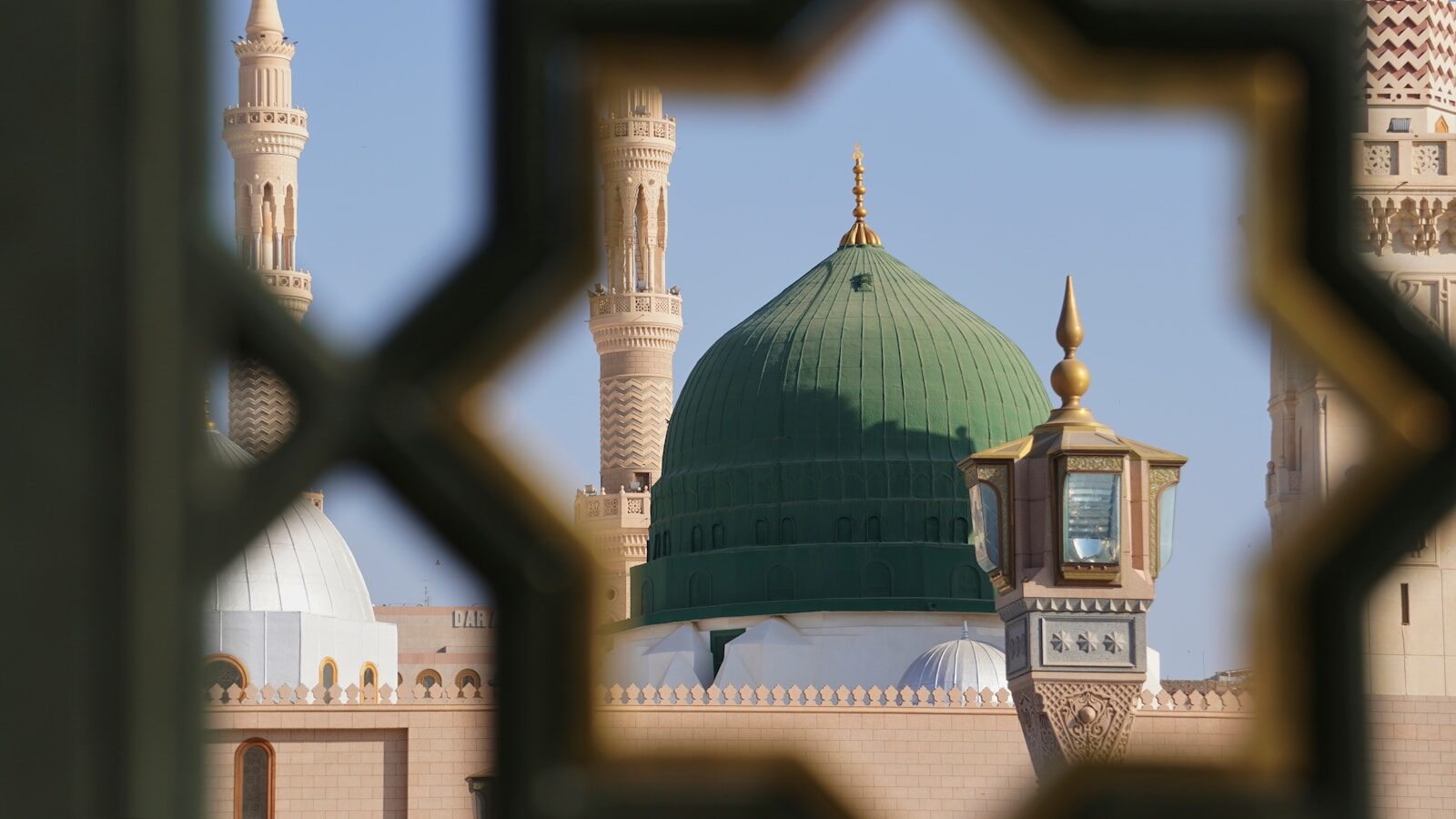
I’ve taken groups through Madinah ziyarat probably forty or fifty times at this point and the thing that keeps coming up is how much it matters whether you arrived knowing the context or whether you’re trying to piece it together while standing in the middle of the Rawdah with a crowd pushing from every direction. Those are genuinely different experiences.
This guide is the thing I wish existed when we first started. Not a Wikipedia summary. The actual gate numbers. What time women’s Rawdah access opens and which entrance to use. What Uhud looks like on the ground and why most groups leave having missed the most important part of the site. Stuff that’s either buried in forums or not written down at all.
Quick note on the word ziyarat (زیارت): it just means visiting. People use it in Madinah to refer to the sites connected to the Prophet ﷺ, his family, the companions, the battles. The history you can still physically go to. That’s what we’re covering in this guide.
How to Plan Your Madinah Ziyarat Route
Most people don’t, and it costs them. What usually happens is you join a group tour bus and the driver picks the order. Some people are fine with that. If you want to actually spend time at the places that matter to you personally though, negotiate a private car and work out the route yourself before you go.
The sequence we’ve landed on after years of refinement:
- Al-Madinah Museum (do this first, not last)
- Masjid Nabawi, Rawdah, and Riyadh al-Jannah
- Jannat al-Baqi (Gate 29, right outside)
- Masjid Ghamama and the small mosques nearby
- Masjid Qiblatain
- Seven Mosques area (Masjid Fath, Salman al-Farsi, Abu Bakr, Umar, Ali)
- Jabal Uhud
- Masjid Quba
- Bir-e-Ghars and Salman al-Farsi’s garden
- Wadi-e-Jinn (if your driver is up for it)
Full circuit by private car is doable in one long day. Two days is much better. If you’re going in summer, two days is not optional, it’s necessary. Uhud at midday in July is not something you want to experience.
One thing about taxis that trips people up: negotiate the whole day upfront, not stop by stop. Somewhere between 150 and 250 SAR is typical depending on when you’re there and how you negotiate. The thing most people forget to confirm is whether the driver will actually wait at each stop. Some of them drop you and circle. Ask before you agree to anything.
If you’re still working out how to get from Makkah to Madinah, we have a separate breakdown of the transport options that goes into the bus versus train versus private car question in some detail: Makkah to Madinah Transport Options Compared.
Masjid Nabawi and Rawdah Ziyarat: What You Actually Need to Know
What I want to spend actual time on here is the Rawdah, because the logistics around it are what people ask about most and what guides consistently skip over.
The Rawdah sits between the Prophet’s pulpit and his grave. Sahih al-Bukhari records it as a garden from the gardens of Paradise, which is the kind of hadith that doesn’t need much unpacking. I’ve watched people cry before they even reached the carpet. That’s what kind of place this is.
The carpet situation confuses a lot of people. There used to be a reliable visual distinction: green carpet in the Rawdah, red everywhere else. That no longer holds. The mosque was refurbished and much of the interior is now green throughout. What actually helps for orientation: look for the white marble pillars in the original section of the mosque, and watch where the concentration of worshippers is pausing for dua. The green dome is directly above this area. You’ll figure it out pretty quickly once you’re inside.
Women’s Access: Gate Numbers and Timing
This is where most guides fall short. Here’s what we’ve seen consistently:
- Women’s gates for Rawdah access: Gate 29 (facing Jannat al-Baqi) or Gate 37
- Evening slot opens around 8:30 PM
- Time inside: roughly five to ten minutes. The area moves quickly and they don’t let it slow down
- Write your duas down before you go in. You will not have time to think once you’re there
- Face the Qibla when making dua. Not the tomb
For men, access runs through the day during non-salah times. Fajr is consistently the best window if you want room to breathe. During Ramadan and Hajj season the pressure inside is something else entirely. Prepare for that mentally.
If you need a Rawdah permit, the Nusuk app is how you get it. We have a step-by-step walkthrough here: How to Get Rawdah Permit on Nusuk App. The Nusuk platform also handles other permit types if you’re still in the planning stage.
Jannat al-Baqi Ziyarat: Visiting Hours, Etiquette and What to Expect
Gate 29 of Masjid Nabawi opens directly toward Jannat al-Baqi. Exit the gate and you’ve basically arrived, the entrance is maybe thirty seconds across the road, so sequence them together rather than returning separately.
The name means Garden of Permanence. Who’s buried here is the kind of list that stops people mid-sentence when they realize what they’re looking at: three of the Prophet’s daughters, his son Ibrahim, his grandson Hassan ibn Ali, his aunts, Uthman ibn Affan, hundreds of companions. Fatimah al-Zahra according to the majority view. The number of people in that ground who were personally known to the Prophet ﷺ is hard to get your head around.
There’s a hadith in Sahih Muslim where the Prophet ﷺ says seventy thousand from this graveyard will enter Paradise without reckoning. Standing there and reciting the graveyard du’a with that knowledge in mind is a different experience from standing at any other cemetery I can describe.
Opening times: after Fajr until around 10 AM, then again after Asr until Maghrib. Non-Muslims aren’t permitted in. Women’s entry is a question that differs between madhabs, so check with your scholar or group leader before planning on it.
Etiquette: recite the du’a quietly, don’t photograph, don’t wail. The area is monitored and the guards are consistent about enforcement. Go in knowing the specific supplications for visiting graves; most du’a apps have a section for this organized by occasion.
Masjid Quba: The First Mosque in Islam and Its Reward
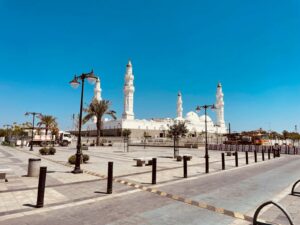
The first mosque ever built in Islam. The Prophet ﷺ laid the foundation stones himself when he arrived in Madinah after the Hijra in 622 CE, before he’d even reached the city center. I mention the date because people don’t always clock how early this is. This predates almost everything else in Madinah you’ll visit that day.
The hadith on this one is clear and specific. Sahih Bukhari records: “Whoever purifies himself at home and comes to Masjid Quba and prays two rak’at there will have the reward equal to performing Umrah.” Saturday mornings draw the biggest crowds for this reason, but the reward doesn’t depend on the day. Any day works.
It’s roughly 5 km southwest of Masjid Nabawi. Group it with Bir-e-Ghars on the same trip since they’re right next to each other. Separating them across two different days is just unnecessary back-and-forth.
Bir-e-Ghars and Salman al-Farsi’s Garden: Hidden Ziyarat Sites Near Masjid Quba
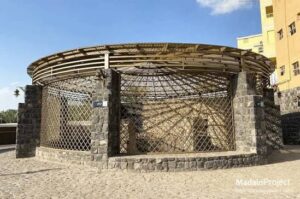
Bir-e-Ghars is one of those stops that doesn’t look like much on arrival and then stays with you. It’s the personal well of the Prophet ﷺ. He drank from it. Narrations state he asked that it be used in his ghusl after death.
The well is preserved behind a protective enclosure now, so you’re looking at it rather than drawing from it. But the historical specificity of the site is the point. This exact well. Not a well from that general period. This one.
Right next to Bir-e-Ghars is the site of the date palm garden connected to Salman al-Farsi (رضي الله عنه). I’d genuinely recommend finding the full account before you go. The condensed version: his freedom was tied to planting 300 date palms and waiting for them to bear fruit. The Prophet ﷺ planted each one himself, every single tree, with his own hands. Every one took root. I’ve read that probably fifteen or twenty times and it still stops me. And it’s in the original narrations, not something added later.
Salman spent years moving between religious communities across Persia, Syria, and Iraq before eventually reaching Madinah, genuinely searching for something he couldn’t name yet. The account reads like it was embellished somewhere along the way. It wasn’t. The historical sources are pretty thorough on the details. A lot of the narrations are on Sunnah.com if you want to go through them before the trip.
Jabal Uhud: Battle of Uhud History and What to See During Madinah Ziyarat
Uhud, 625 CE. Seventy companions killed. The Prophet ﷺ wounded, bleeding, a tooth gone. I want to give you a rough picture of what actually happened out there because standing at the site without that context is a completely different experience from understanding what you’re looking at.
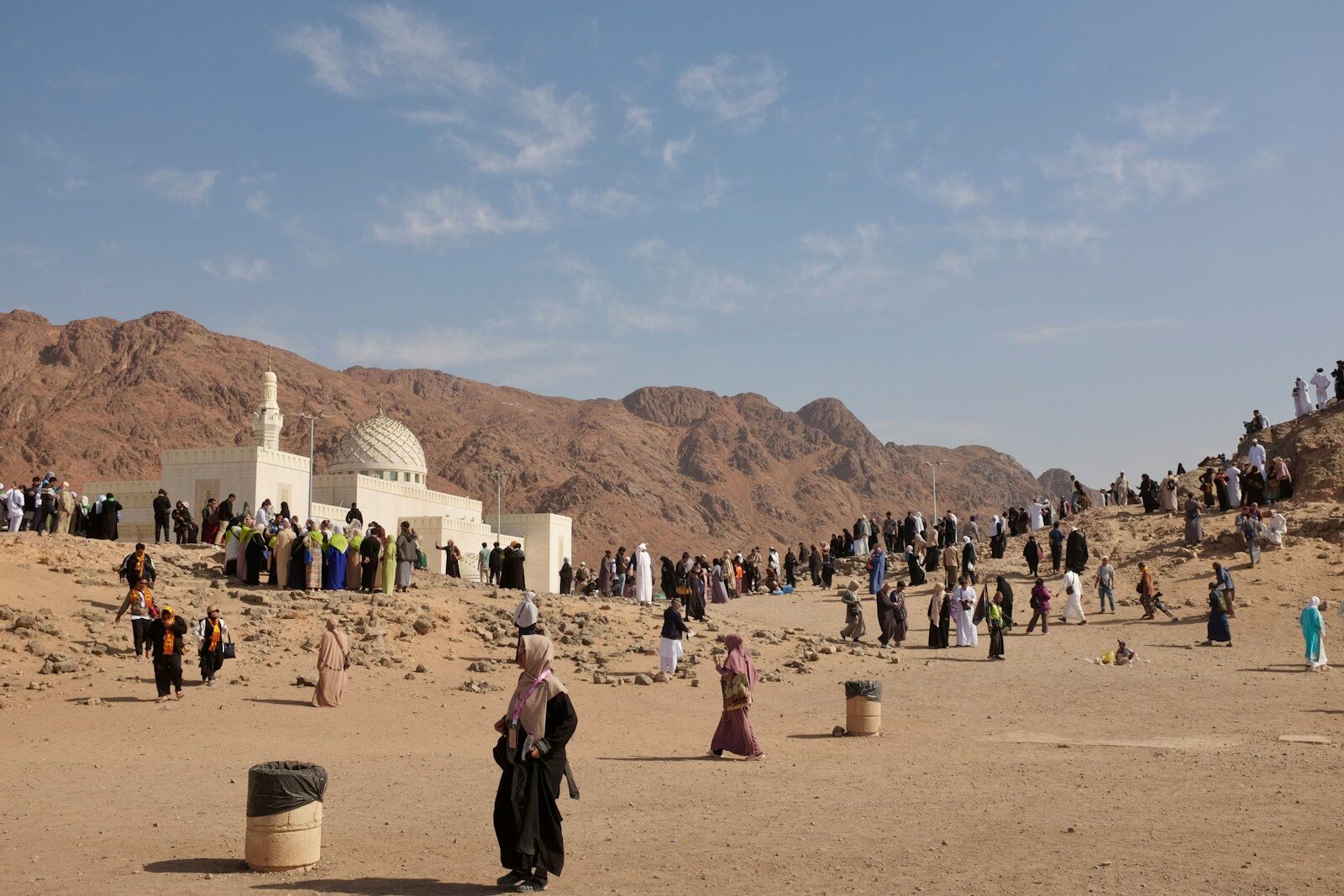
The Muslim archers had one instruction from the Prophet ﷺ: don’t leave that ridge, whatever happens. When things started going the Muslims’ way, some of them came down anyway, thinking the battle was done and there were spoils to collect. Khalid ibn al-Walid was fighting with Quraysh then, before his conversion. He saw the flank open and went through. The rear broke. Seventy companions died after that.
The Quran addresses this at length in Surah al-Imran. Not as a defeat, exactly. As a test. As a lesson in what happens when a direct instruction from the Prophet ﷺ is second-guessed in the field. Scholars still cite it. The terrain of the mountain itself, the ridge where the archers stood, the ground below where the cavalry came through, you can read the whole sequence on the landscape if you know where to look.
Hamza ibn Abd al-Muttalib (رضي الله عنه) is buried at the base. The Prophet’s uncle. He’s the one the Prophet called the master of martyrs, and the narrations are explicit that he wept at the grave, openly, more than once. People rush through this burial on the way back to the bus and I get it, the site is large and groups have places to be. Still. If there’s one place at Uhud to actually stop and sit, it’s this one.
A few things at Uhud that most groups miss: the cave partway up where the Prophet ﷺ took shelter during the battle is reachable on foot, not a hard climb, and worth doing if you have the time. Free tea and kaak, a traditional dry biscuit, are usually handed out near the base for pilgrims. And the mountain itself: the Prophet ﷺ said it “loves us and we love it” (Bukhari and Muslim). I’ve read that hadith in books plenty of times and it’s fine in that context. Standing at the actual base of the actual mountain while saying it is not the same experience at all.
The Saudi Tourism Authority’s Madinah page has current visitor information including any access restrictions around Uhud that may apply during specific seasons.
Seven Mosques (Sab’u Masajid): Battle of the Trench Sites in Madinah
The Battle of the Trench, 627 CE. A coalition of around ten thousand from Quraysh, Banu Ghatafan, and allied tribes besieged Madinah. The strategy of digging a trench along the northern flank, the city’s only exposed side, came from Salman al-Farsi. It was genuinely unprecedented in Arabian warfare at the time and it worked.
What most guides spend all their time on is the trench. What actually ended the siege is more interesting. After roughly three weeks of stalemate, the Quran records in Surah al-Ahzab: “We sent upon them a wind and armies you could not see.” A violent storm, cold, total darkness. The besieging army couldn’t control their horses, couldn’t see their tents, couldn’t coordinate. They scattered. The city was never breached.
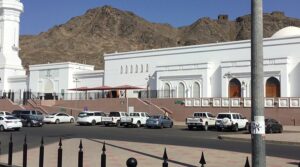
The cluster of small mosques in this area marks the positions of companions during the siege:
- Masjid Fath: Where the Prophet ﷺ made du’a for three days during the siege and received the revelation of victory. There are narrations about Wednesday afternoon du’a here being especially answered. Scholars differ on the strength of those narrations, worth asking your scholar about before you plan around it
- Masjid Salman al-Farsi: His position during the battle
- Masjid Abu Bakr as-Siddiq, Masjid Umar ibn al-Khattab, Masjid Ali ibn Abi Talib: Their respective battle positions
The mosques themselves are small and not always open to go inside. The geography is where the time is well spent: stand on the ridge near Jabal Sal’ and try to see where the trench would have run, what the companions were looking out at, what the exposed northern flank actually looked like from their position. No photograph gives you that. You have to be standing there.
About 5 km northwest of Masjid Nabawi. Group it with Qiblatain since they’re in the same general direction.
Masjid Qiblatain: Mosque of the Two Qiblas in Madinah
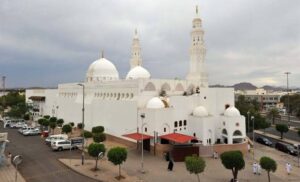
During salah, the order came to change the Qibla from Jerusalem to Makkah. The prayer continued without stopping, direction shifting mid-rak’ah. The building has been rebuilt several times since, but there are still two mihrabs inside. One faces Makkah, the other faces Jerusalem and stays as a reference point. Worth noting before you walk in so you understand what you’re looking at.
About 4 km northwest of Masjid Nabawi. Doesn’t need a lot of time at the site itself, but I’d feel the absence of it on the list if we skipped it.
Masjid Ghamama: Where the Prophet ﷺ Led the First Eid Prayer in Madinah
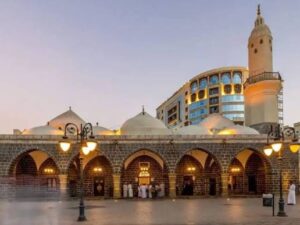
Ghamama means cloud. The Prophet ﷺ led the first Eid prayer in Madinah in the open air here, and a cloud shaded him as he did. It’s a small mosque, rebuilt several times, about 300 meters southwest of Masjid Nabawi. Not always open for prayer. But it’s close enough that passing by it on the way between other sites is easy, and the reason for its name is worth knowing before you do.
Wadi-e-Jinn (Wadi al-Baida): The Magnetic Road Near Madinah
Officially called Wadi al-Baida, about 30 km from Madinah toward Makkah. Cars in neutral appear to roll uphill. People in your group will have opinions about what causes this.
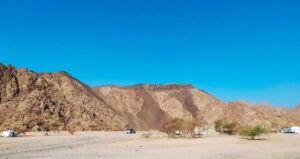
The explanation is a visual illusion. The road has a slight downward grade but the hill geometry around it makes the landscape read as sloping upward. Your visual system processes it as going uphill. The car moves. It feels wrong. The effect is strong enough that even people who fully understand the explanation find it disorienting when they experience it.
Practical note: if anyone in your group has vestibular issues or motion sickness, mention this stop in advance. Twenty to thirty minutes is enough. Your driver will know the exact stretch of road.
Al-Madinah Museum: Why Visit It Before Any Other Ziyarat Site
I put this first in the sequence above deliberately and I’ll explain why here. Most people visit the museum after the ziyarat circuit, if they visit it at all. The entry fee of 50 SAR puts some groups off. Photography isn’t allowed inside and that makes it feel less worth the stop to people who are documenting their trip.
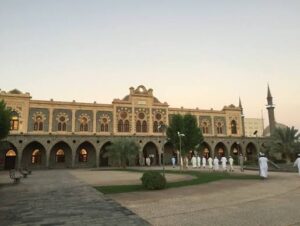
Do it first. Two hours in there with the historical maps of early Madinah, the battle documentation, the artifacts. Walking into Uhud or the Seven Mosques area after that is a genuinely different experience from arriving with no background. What you learn in that museum changes how you read every site for the rest of the day.
English guided tours go at 2 PM on most days. Photography not allowed inside and they actually enforce it, so don’t bother. Entry is 50 SAR and honestly worth every riyal. The official museum listing on Visit Saudi has current opening hours.
One more thing about Masjid Nabawi that doesn’t fit neatly anywhere else: the large retractable umbrellas over the outer courtyard open and close daily around 5 PM in a synchronized sequence across the full piazza. If you happen to be there when it starts, stay and watch. The scale of it is something. Small moment, but people remember it.
Madinah Ziyarat Tips: Gate Numbers, Timings and What to Carry
Masjid Nabawi has 95 gates and the numbering is genuinely confusing if you haven’t memorized it. The ones that come up most often:
- Gate 1 (King Fahd Gate): Main western entrance, Clock Tower side
- Gate 21: Northern entrance, useful for men going to the Rawdah from the east
- Gate 29: Looks directly toward Jannat al-Baqi. Women’s entry for the Rawdah evening slot
- Gate 37: Alternative women’s Rawdah access
- Gates 79/80: Southern side, handy if your hotel is below the mosque
When you check in, ask the hotel which gate sits nearest to the property. Walking in the dark after Fajr without knowing that is the kind of thing that costs you time when you don’t have it. On the packing side, our Umrah packing list has a section specifically for ziyarat days, footwear, du’a books, what to bring versus what to leave at the hotel.
What to Carry
- Printed or downloaded duas for each site. Organizing them by location in advance saves time on the day
- Separate du’a for graveyard visits; Jannat al-Baqi requires its own supplication
- Water and something to eat. Several sites have limited facilities and the distances add up across a full day
- Closed walking shoes. Uhud has uneven ground and you’ll feel it in open sandals
- Prayer mat if you want to pray at each mosque rather than just visit the exterior
Timing the Day
- Start early. Uhud before 9 AM, especially in summer months
- Qiblatain and the Seven Mosques are in the same direction; cover them in one drive
- Quba and Bir-e-Ghars are adjacent; late afternoon when the area quiets down
- Women planning the Rawdah: structure your whole day around being back at Masjid Nabawi by 8 PM for Gate 29 or 37
If you’re still planning the broader trip around the best season to go, our guide on the best time to perform Umrah breaks down the weather and crowd patterns month by month.
Inside the Rawdah: What Actually Helps
The crowd pressure during Ramadan and Hajj peak is something most people aren’t prepared for, even when they’ve been told about it. What helps:
- Move with the crowd. Pushing against it doesn’t work and creates problems for everyone around you
- One focused du’a is better than a long list. Five concentrated minutes beats ten scattered ones
- Recite salawat continuously as you move through. It keeps you present when the crowd is disorienting
- Your time in there will feel too short. Accept that before you enter. It always feels too short. What you say in those minutes is what matters
Resources to Help Plan Your Ziyarat in Madinah
A few places that are worth having before the trip:
- Nusuk (nusuk.sa): The official Saudi government platform for Rawdah permits, Hajj permits, and Umrah bookings. If you haven’t registered yet, do it before you leave home
- Sunnah.com: Searchable hadith database. Useful for looking up the specific narrations related to each site before you visit. Sahih al-Bukhari and Sahih Muslim are both fully available
- Visit Saudi, Madinah section: Current opening times, entry fees, and visitor information for sites including the museum
- General Presidency of the Two Holy Mosques: Official information on Masjid Nabawi access, gate schedules, and current guidelines
For visual preparation, several creators on YouTube have documented full Madinah ziyarat circuits on camera including gate entry, crowd conditions inside Rawdah, and the look of sites like Bir-e-Ghars and Salman al-Farsi’s garden. Searching “Madinah ziyarat 2025 full circuit” or “women Rawdah Gate 37 2025” turns up recent uploads that give you a realistic sense of what each site looks like when you arrive.
Final Thoughts on Ziyarat in Madinah 2026
Scholars are consistent on this: ziyarat here is Sunnah, not obligatory. You’re not completing a requirement. I think that’s worth keeping in mind because it’s easy to spend the whole day ticking boxes and miss what you actually came for. The checklist isn’t the point.
When you’re in Jannat al-Baqi doing the graveyard du’a, when you’ve found a space near the Rawdah to finally say what you came to say, when you’re sitting at the base of Uhud trying to absorb what happened on that ground: those aren’t moments for photographs. They’re moments to actually be in.
Al-Daraqutni collected a narration: “Whoever visits me after my death, it is as if he visited me during my lifetime.” I don’t have much to add to that.
If you’re still putting together the broader trip and want help with accommodation or a structured itinerary, you can browse our Umrah packages here or reach us directly. We’ve done this circuit more times than I’ve been able to count and we’re happy to answer questions before anything gets booked.
May Allah accept from everyone who makes this journey.
If you are working out which entrance to use, the Masjid Nabawi map with every gate number sets out all 42 gates and which one reaches the Rawdah.