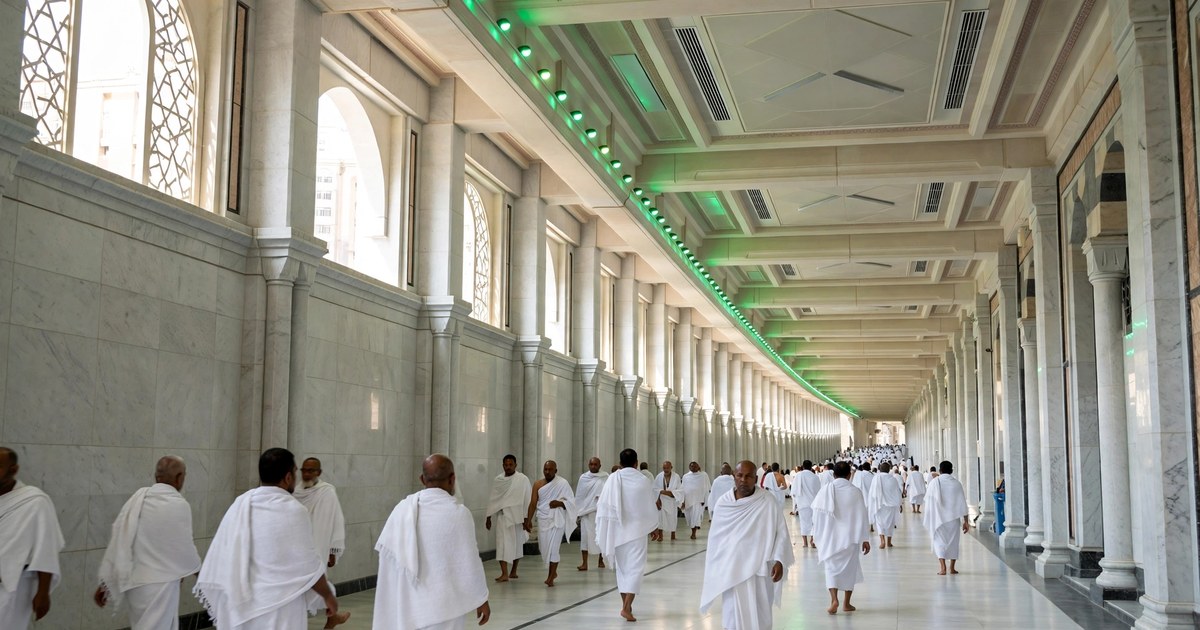
Safa and Marwa are two small hills on the east side of Masjid al-Haram, the Grand Mosque in Makkah. Hajar, the mother of Ismail, ran between them seven times looking for water for her infant son, and Allah answered her with the well of Zamzam. Walking the same seven lengths, called Sa’i, is a rite of both Umrah and Hajj. The Safa Marwa walk is 394 metres each way inside an air-conditioned, four-floor gallery, and the seven lengths total 2,761.5 metres by the official measurement.
What is the story of Safa and Marwa?
The story is that Ibrahim left Hajar and the infant Ismail alone in the valley of Makkah on Allah’s command, and when their water ran out Hajar searched between Safa and Marwa until an angel opened the spring of Zamzam. The full account is narrated by Ibn Abbas in Sahih al-Bukhari 3364.
Ibrahim brought Hajar and the nursing child to a spot near where the Kaaba now stands, under a tree on the site of Zamzam. Nobody lived in Makkah and there was no water. He left them a leather bag of dates and a small water-skin and turned for home. Hajar followed, asking whether Allah had ordered this. He said yes. She answered, “Then He will not neglect us,” and went back.
When the water was gone and the child began to writhe with thirst, she could not bear to watch him. She climbed Safa, the nearest hill, and looked over the valley for anyone at all. Seeing nobody, she came down, tucked up her robe at the valley floor and ran like a person in distress until she had crossed it, then walked up Marwa and looked again. She did this seven times. The Prophet said, “This is the source of the tradition of the walking of people between them.”
On the seventh time, at Marwa, she heard a voice and saw an angel at the place of Zamzam digging with his heel, or his wing, until water flowed. She built a basin around it with her hands and filled her water-skin. The Prophet added that had she left it alone, Zamzam would have been a stream running on the surface of the earth. Later a party from the tribe of Jurhum noticed a bird that circles only over water, found the spring, and asked Hajar’s permission to settle beside it. She agreed on condition that they had no right to the water. That is how Makkah came to be inhabited.
What does the Quran say about Safa and Marwa?
The Quran names the two hills and makes walking between them part of pilgrimage. Verse 2:158 reads, in Dr Mustafa Khattab’s translation: “Indeed, the hills of Safa and Marwah are among the symbols of Allah. So whoever makes the major or minor pilgrimage to the Sacred House, let them walk between the two hills,” as shown on quran.com. Major pilgrimage is Hajj; minor pilgrimage is Umrah. Sa’i therefore belongs to both.
The verse also settles the order. Jabir ibn Abdullah reports that as the Prophet approached Safa he recited this verse and said, “I begin with what Allah began with,” in Sahih Muslim 1218a. Safa is named first, so Sa’i starts at Safa and ends at Marwa.
Why is Safa Marwa 7 times?
Sa’i is seven lengths because Hajar crossed the valley seven times, and the Prophet performed seven and identified her search as the origin of the rite. The narration in Sahih al-Bukhari 3364 says she “repeated that seven times,” and Jabir’s account in Sahih Muslim 1218a describes the Prophet going from Safa to Marwa and back until his last length ended at Marwa. Seven is not explained beyond that in the texts; the rite is a re-enactment.
Count the lengths, not the round trips: Safa to Marwa is one, Marwa back to Safa is two, and the seventh finishes at Marwa.
How long is Safa Marwa walk?
The official length of the Mas’a, the gallery between the hills, is 394 metres, and the distance covered over seven lengths is 2,761.5 metres, according to the Saudi Press Agency’s report on the Mas’a expansion. Most guides say 450 metres and 3.15 kilometres; those are unofficial estimates.
| Sa’i by the numbers | Figure | Source |
|---|---|---|
| Length between Safa and Marwa | 394 m | Saudi Press Agency |
| Seven lengths | 2,761.5 m | Saudi Press Agency |
| Floors | Four | Saudi Press Agency |
| Capacity | 118,000 people per hour | Saudi Press Agency |
| Average time for Sa’i, Rabi al-Thani 1447 | 46 minutes | General Authority via SPA |
| Pilgrims doing Sa’i on the ground floor | 83 percent | General Authority via SPA |
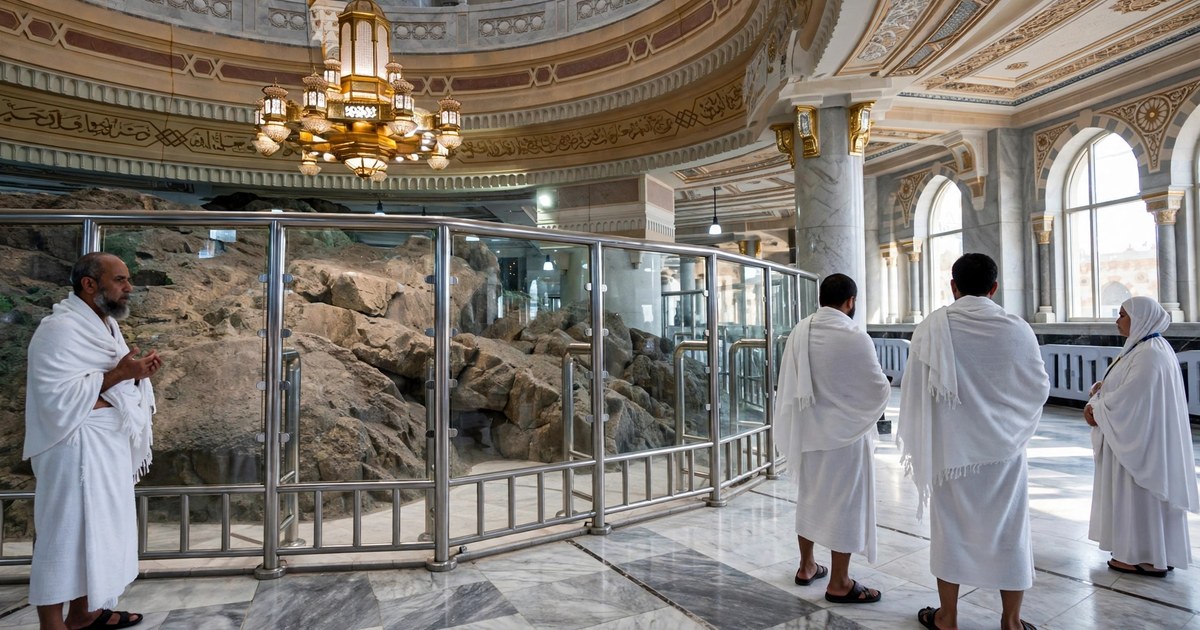
On the ground floor the hills rise at each end, and the rock of Safa and Marwa is exposed behind railings so you can climb a few metres and see the Kaaba, the sunnah position for the dua. Those climbs and a slow crowd make the walk feel longer than the number suggests.
Why do men run during Safa Marwa?
Men jog the short stretch between the two green lights because that is where the Prophet ran. Jabir describes him walking down from Safa and, when his feet reached the bottom of the valley, running until the ground rose, then walking to Marwa, in Sahih Muslim 1218a. Ibn Umar’s report in Sahih al-Bukhari 1644 says the same: between Safa and Marwa he used to run in the bed of the rainwater channel.
That valley floor is now level marble, so green lights on the walls and pillars mark where the low ground was. Between them, men move at a brisk jog; before and after, everyone walks. Women walk throughout, and the mosque’s stewards direct them to. The run is a sunnah, not a condition, so a man who cannot jog has still completed his Sa’i.
What is the Mas’a like today?
The Mas’a is a covered, air-conditioned, marble-floored gallery 40 metres wide with four floors, run as a one-way system with separate lanes. The Saudi Press Agency describes dedicated pathways for the elderly and people with disabilities, electric carts, and management by real-time crowd density data with field teams working around the clock.
From an operations point of view, this is what that means for you:
- Outbound and return traffic use different lanes divided by a central barrier; enter the correct lane at Safa and you will be carried the right way.
- Wheelchair and cart lanes run along the sides on the ground floor; the middle lanes are for walkers.
- The upper floors are quieter and cooler and the length is the same; when the ground floor is packed in peak season, the first floor often moves faster.
- Zamzam coolers stand along both sides, and toilets are outside the Mas’a, so use them before you start.
How long does Sa’i take, and when is it quietest?
Sa’i takes about three quarters of an hour on an ordinary day. The General Authority measured the average at 46 minutes during Rabi al-Thani 1447, October 2025, with 83 percent of pilgrims using the ground floor and 13 minutes on average to walk from the Mataf to the Mas’a. In our groups’ experience it roughly doubles in Ramadan. For the whole trip timeline, see our guide to how long Umrah takes.
In our experience the quietest hours are after Isha until about one in the morning and between Fajr and sunrise; the busiest is the hour before each prayer. Wudu is not a condition of Sa’i, the view of all four schools as set out on Islam Question and Answer, so a woman whose period begins after Tawaf can finish her Sa’i and complete her Umrah.
The fixed words said on each hill, with the Arabic and meaning, are in our duas for Umrah guide, and the full order of the rites is in our guide to how to perform Umrah. There is no set dua for each of the seven lengths, whatever a booklet may assign.
Our Umrah packages include hotels within walking distance of the Haram and a guide who takes you through Tawaf and Sa’i on the day, with prices shown in your own currency: pounds for readers in the UK, rupees for readers in Pakistan.
Frequently Asked Questions
Which comes first, Safa or Marwa?
Safa comes first. Verse 2:158 of the Quran names Safa before Marwa, and Jabir ibn Abdullah reports in Sahih Muslim 1218a that the Prophet recited the verse as he approached and said he would begin with what Allah began with. Every Sa’i starts at Safa and ends at Marwa.
Is Sa’i part of Umrah or only Hajj?
Sa’i is part of both. Verse 2:158 applies the walk between the hills to whoever makes the major or minor pilgrimage, that is Hajj or Umrah. In Umrah it follows Tawaf and the two rak’ahs at Maqam Ibrahim, and once the seventh length ends at Marwa the only rite left is cutting the hair, which completes the Umrah.
Can you do Sa’i in a wheelchair?
Yes. The Saudi Press Agency describes dedicated pathways for the elderly and people with disabilities and electric carts in the Mas’a, and wheelchairs with pushers can be hired inside the mosque. The chair lanes run along the sides; the seven lengths are the same, and the rite is complete whether you walk or are pushed.
Can women run between the green lights?
Women walk the whole of Sa’i at a normal pace, including the section between the green lights. The jog in the valley bed is a sunnah reported of the Prophet in Sahih Muslim 1218a and followed by men, and the mosque’s stewards direct women to walk. A woman who walks all seven lengths has performed Sa’i as required.
Can you do Sa’i on the upper floors?
Yes. The Saudi Press Agency reports that the Mas’a now has four floors, and each runs the full length between the two hills. The upper floors are cooler and less crowded and the seven lengths are the same; the only thing you give up is the climb onto the exposed rock of the hills, which is on the ground floor.